syn
syn is a hardware synthesizer we are building with dok. I wrote the initial code as a linux/jack program in C with the hope that someday this code would run on real hardware. This dream is now a reality.
control panel (early prototype)
Mar 12, 2025
@dok finished routing all tracks in kicad for control panel + silkscreen with pretty labels using KiBuzzard
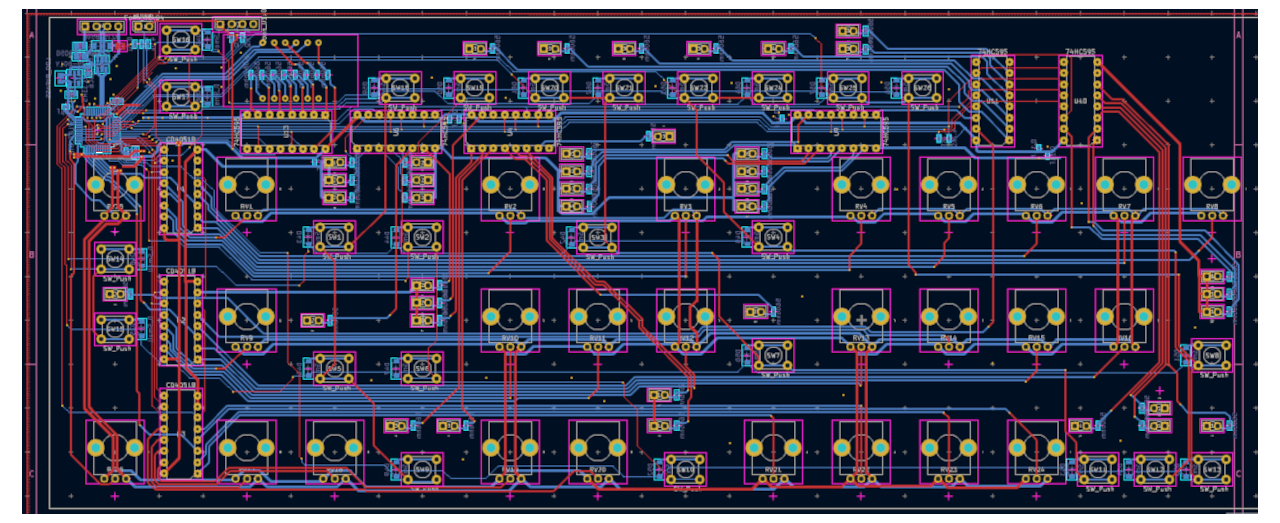
Mar 28, 2025
we received 5x pcbs
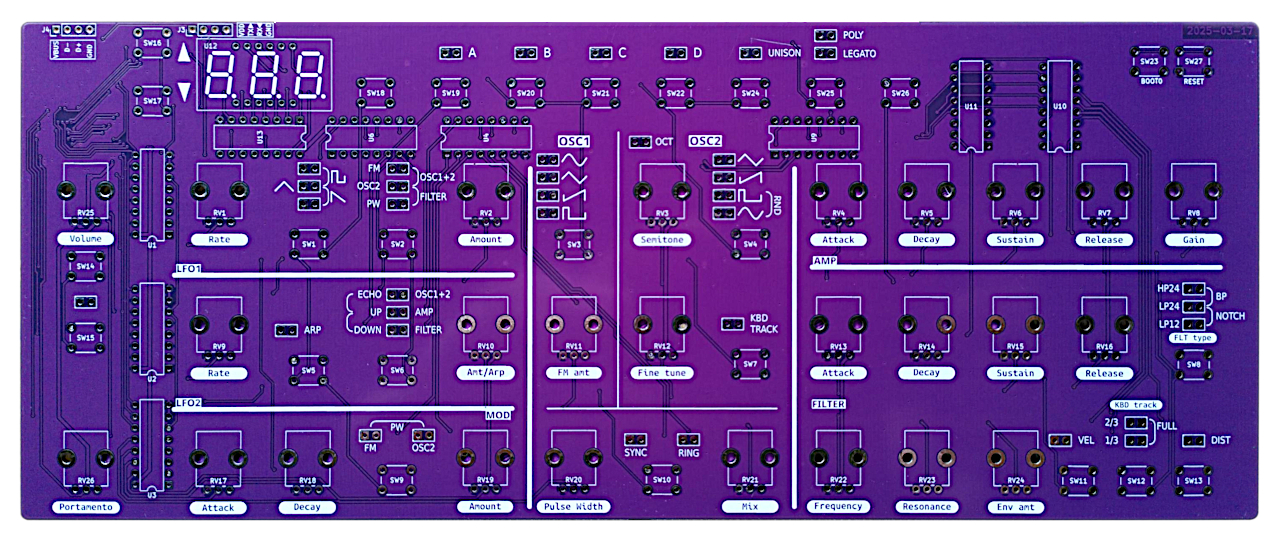
Mar 31, 2025
we soldered two units, flashed a usb firmware and had successful bring-up.
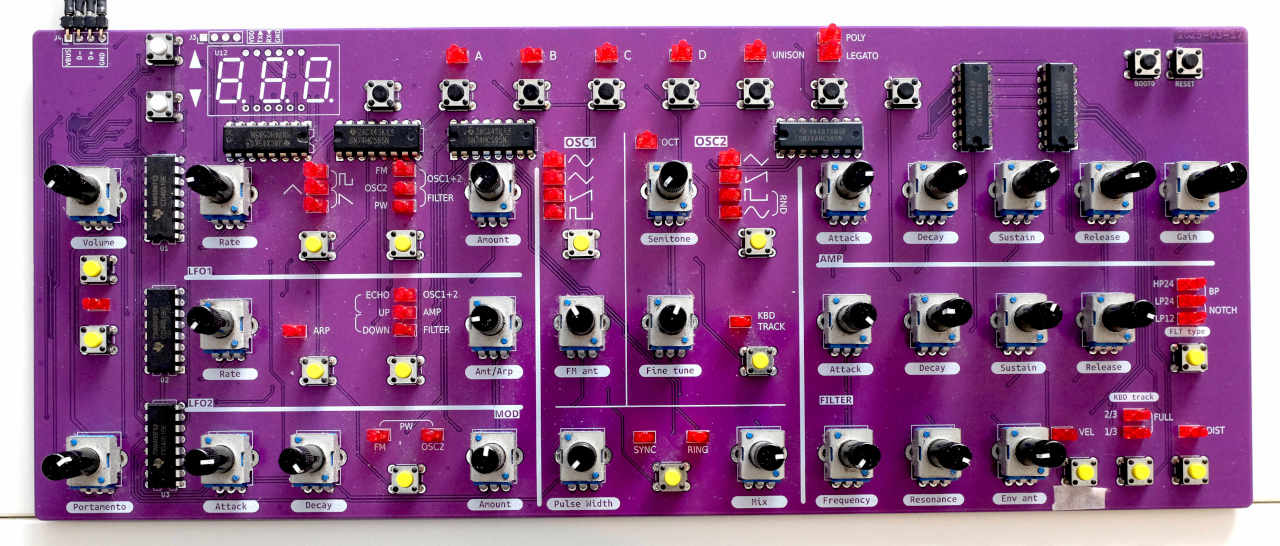
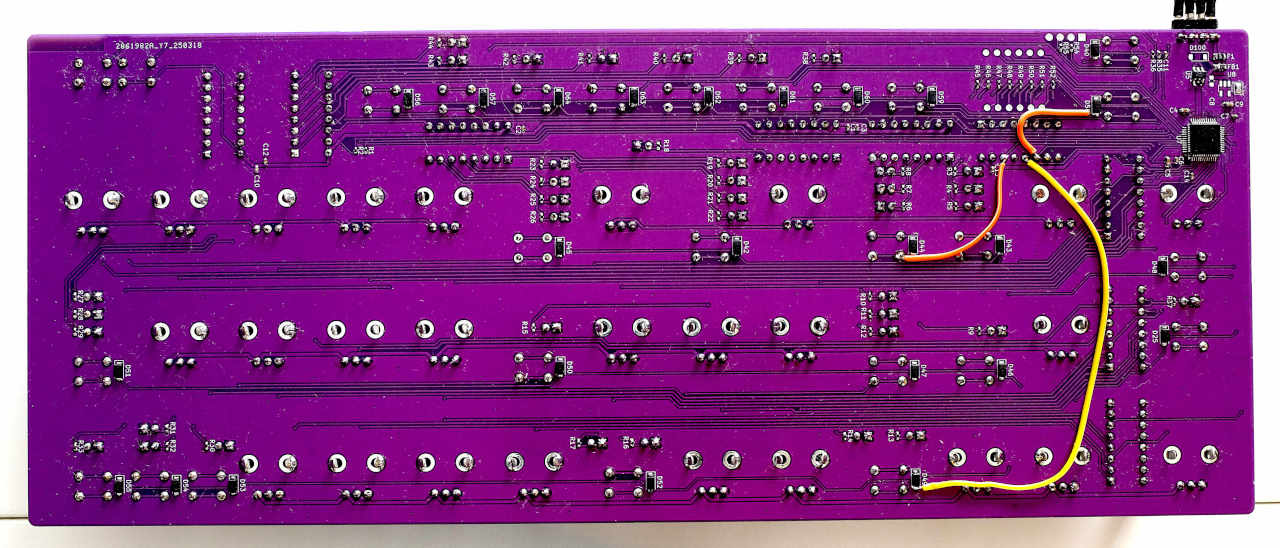
Apr 2, 2025
I wrote a usb-midi firmware and received first control changes
April , 2025
The month was spend furiously writing usb firmware code to make the synth functional for revision25.
April 20, 2025
We released Summoning our 32Kb linux intro @revision25 made with our tools and syn rewrite and our fresh control panel. Quite an experience watching it live from the big hall
stm32
Jan 29, 2025
@dok did a fixed point rewrite of syn and we ported it to stm32f411.
This was the very first notes and control changes sent via uart. Nordrack2x only used as a midi controller, audio from the evaluation board using a stm32f411 firmware I wrote (no hal).
updates
Nov 15, 2025
v2
We are currently working on synth/front-panel v2.
v1 started as a Nord Lead 2x clone (which I absolutely love), now the synth has evolved on its own path. It still have this ability for weird complex spectrum, with korg k35 (ish) filter implementation, substractive + fm synthesis but a few design changes opened new soundscapes.
Removed filter envelope (replaced by modulation envelope). Modulation envelope now target fm_amt, lfo_amt, filter cutoff, high-pass mix simultaneously,.variable modulation intensity for each parameter.
This way modulation act simultaneously as an exciter, generating complex high end spectrum (fm_amt, high-pass mix) and as a damper (low-pass freq.)
Amplitude + modulation envelope now share the same potentiometers. Those envelopes slopes are tuned so that amplitude envelope gives body to the sound following initial excitation. It made sense to me that those envelopes could be correlated. This results in tangible sounds.
Parallel high-pass filter mix (+env) allow for early transient to get through and decay fast. This "opens" the sound so much during attacks. I don't see parallel filters so much, this works wonders.
lfo only target fm_amt but at audio rate, allowing to create formants.
finally, a 'secret' acid recipe : blending fixed point oscillators outputs using XOR (wet/dry). This + fm is gluing oscillators output together and giving an awesome acid overdrive sound.
objectives
Following a discussion on mastodon, here are some informations about schedule and objectives for the months ahead.Our goal is to release a hardware synthesizer. We aim to have a few units available by april 2026, so we can bring them to synthfest in France. We would also love to attend Superbooth.
We develop and run the synth on linux. We also made a front panel prototype that we use as a usb controller. Technically, it works very well (see demos, livecoding) and I'm extremely happy with it.
However from the point of view of releasing a music instrument, we really want to go for hardware with well defined boundaries and constraints. Also, physical control is an integral part of the instrument. Code and front panel design go hand in hand with live performance in mind.
With a hardware synth, our goal is to get technology out of the way as much as possible for users. Simple, standard interface: 2x audio output, 1x midi in/out. Plug and play, just working, no matter what. Linux audio / computer audio is nowhere near the "it just works" territory.
About sharing resources, we aim to go for open-hardware and keep firmware close for some time. Although we are more than willing to share what we've learned on the way, discuss and document design, or whatever question. We are moving steadily towards production and we still have a lot of things ahead of us.
health check
Dec 14, 2025
Quick health check :) Our synth running on stm32f411 evaluation board. 4x voices polyphony. sequenced by orca + custom usb control panel (v1)
fine tuning
Dec 18, 2025fine tuning the unified amplitude/filter/modulation envelope controls while keeping expressiveness and soundscape depth + breadth. Two clips from my test sessions
4x tracks
Dec 21, 2025A 4x track live techno session using our synth + orca sequencer
Testing pitch modulation (kicks) and latest envelope architecture.
I'm extremely happy with where we are right now. Direct capture from obs, no mix/fx/post-process.
I heard dok was looking for dac's for our next pcb :)
keyboard tuning
Jan 4, 2026
I've spent time working on keyboard control for our synth. I previously discussed the design decision to link amplitude/filter/modulation envelopes together. I was extremely happy with how responsive the controls felt using the synth as sequenced instrument.
I did extensive testing and tuning to port our instrument expressiveness and tangible feel to keyboard control.
latest changes:
envelope slope + velocity sensitivity control ability to switch between long/shortenvelopes micro-tonal scales
We keep same potentiometer count, no hidden functions, no sub-menus.
usual test session/sanity check. mono output, no fx, no post process. Checking some "classic" sounds and going into weirdness.
firmware ok
Jan 28, 2026
Synth architecture is done and firmware development is reaching maturity. We should be receiving main board pcb next week thanks to @dok hard work. Exciting stuff coming up. Working on new music and live setup in the meantime. I'm really happy with the synth ability to go into acid lines and how expressive/responsive the controls feel. work in progress...
1x syn track (subtractive/fm/am synthesis with dynamic amp/mod/filter envelopes + parallel hi-pass filter + xor between osc) 1x glsl shader as drum machine orca sequencer no fx, no post-process
main board v0
March 1, 2026
Over the past months dok designed the main board of our synthesizer. The 13th of February 2026 5x pcbs arrived and dok soldered a first unit. On the same day we were able to output sound from mcu to the dac.
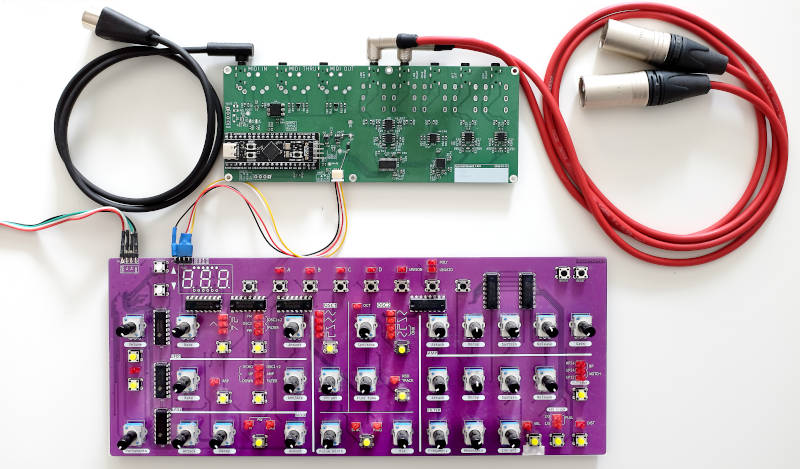
Next day we soldered two new units with additional dac and diffential audio outputs.
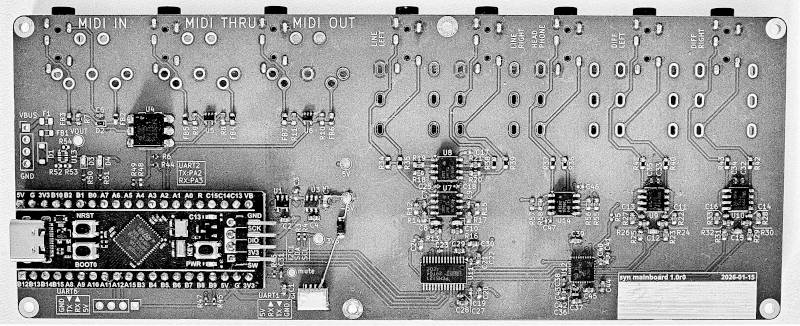
Rem: About the diode soldered from charge-pump -5V to ground. At startup charge pump would randomly fail to provide -5V and stay stuck at 0.6V. Problem known + solution known to manufacturer.
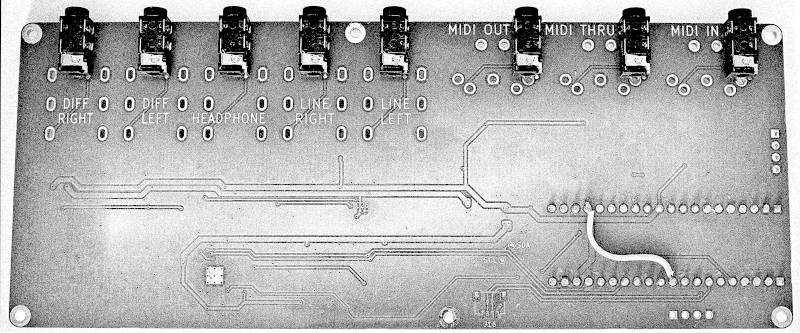
We are incredibly happy to announce that our first main-board is fully functional. Here is an extract from yesterday test session
Again, this was a successful bringup thanks to dok hard work on main board design. This is a big achievement for us and such an incredible moment. I'm extremely hyped for what comes next. Enclosure + front-panel v2, might try preset save/load to/from flash tomorrow.